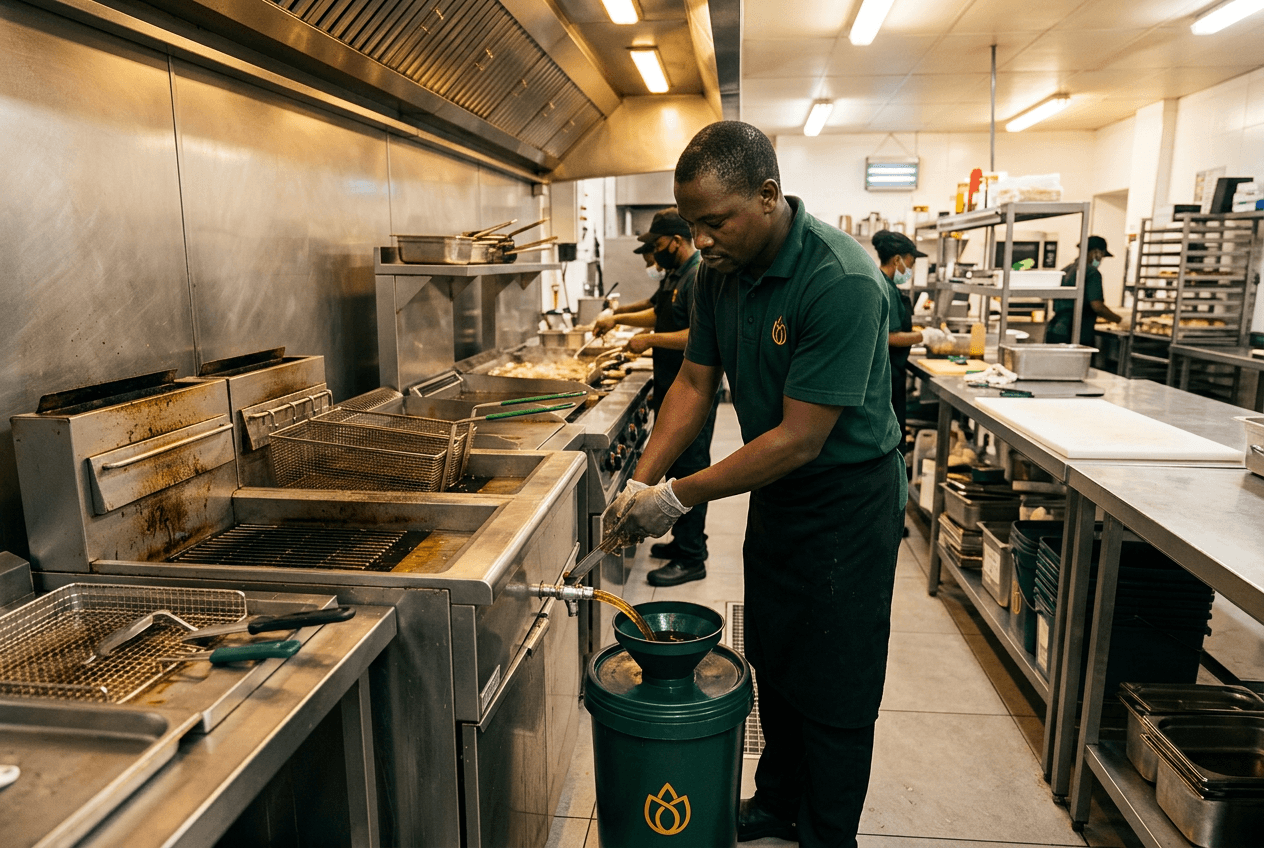
Every commercial kitchen produces used cooking oil faster than most managers expect — a single fryer can go through 20 litres a week. How that oil is stored between collections matters just as much as who collects it: poor storage leads to spills, pest problems, and oil that's degraded past the point of being useful for biodiesel.
Start with a dedicated, sealed container. Open buckets or repurposed food-service tins invite contamination from rainwater, cleaning chemicals, and food debris, all of which reduce the oil's value and can create a health hazard in the back-of-house. A proper lidded drum or bucket, kept away from direct sunlight and heat sources, keeps the oil stable until collection day.
Location matters too. Store used oil away from your walk-in fridge, dry storage, and any area food passes through — ideally in a covered outdoor bay or a dedicated waste room with a hard, easy-to-clean floor. This limits odour, keeps pests away from food-prep areas, and makes a spill easy to contain and clean rather than a health-inspection issue.
Never pour used oil down a drain or into a municipal sewer line, even in small amounts. It solidifies inside pipes, causes blockages and costly plumbing call-outs, and in most municipalities is against local waste by-laws for commercial premises. If a container is nearly full before your scheduled collection, it's always better to call ahead than to let staff find a workaround.
Label your storage container clearly and train kitchen staff on the routine — where it goes, how full is "full enough" to flag for an early collection, and who's responsible for topping it up safely (never while the oil is still hot). A five-minute induction for new kitchen staff avoids most storage mistakes before they happen.
Finally, keep a rough log of how much oil you're generating each week. It helps you plan collection frequency — weekly for high-volume fryers, termly for smaller operations — and gives you a clear number to compare against what you're being paid per litre.
Getting storage right isn't complicated, but it's the difference between used cooking oil being a nuisance you deal with weekly and a small, predictable line of income that costs your kitchen nothing extra to manage.