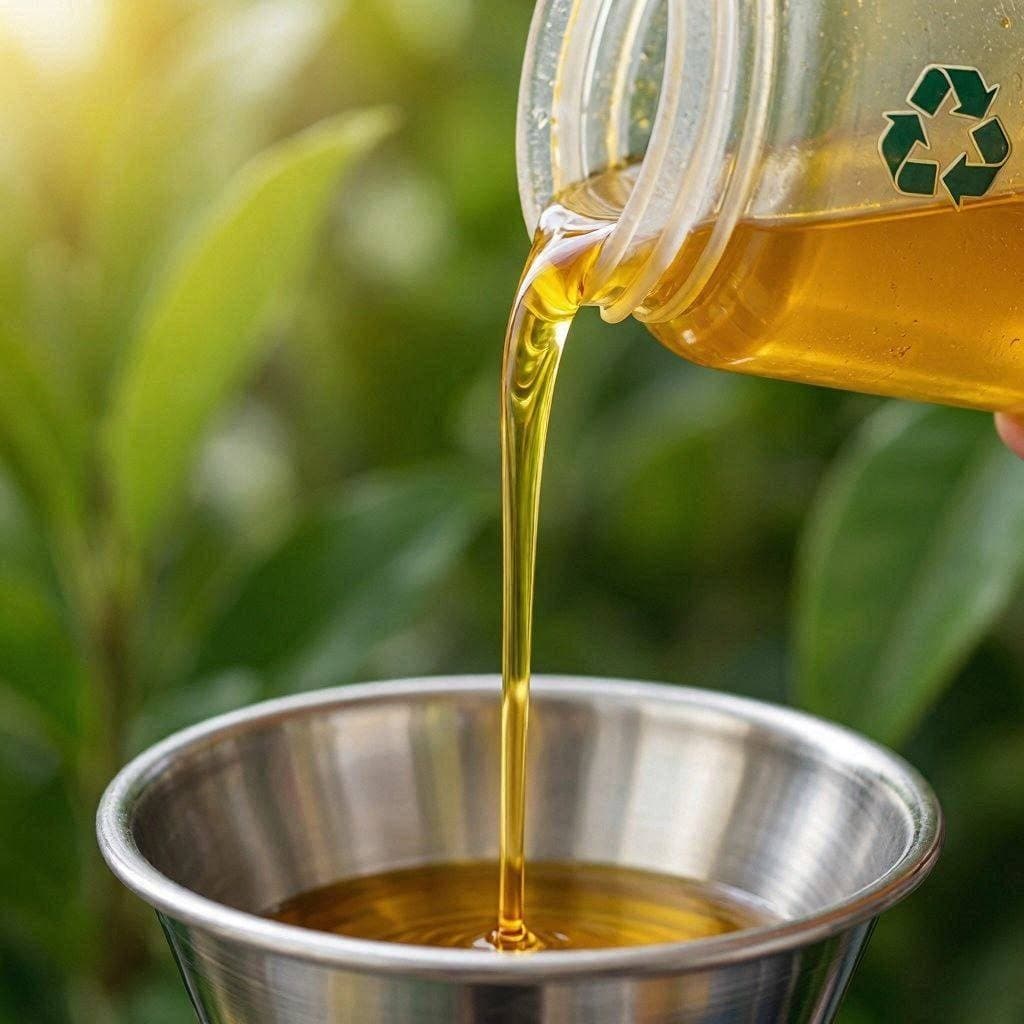
It's easy to think of used cooking oil as waste — something to get rid of, not something with a second life. In reality, the oil that comes out of your fryer at the end of a busy service is the raw material for biodiesel, a renewable fuel that's already replacing diesel in vehicle fleets, generators, and industrial equipment across the region.
The journey starts the moment we collect from your kitchen. Every batch is logged against the collection it came from, so it stays traceable from your premises through to processing — this matters because traceability is what keeps used oil out of the informal food market, where it's sometimes illegally resold for cooking. Proper collection and processing closes that loop entirely.
Once collected, the oil goes through filtering to remove food particles, water, and other contaminants left over from cooking. This is a necessary first step regardless of what the oil is eventually used for, and it's also where quality is assessed — heavily degraded or contaminated oil is handled differently from oil that's still relatively clean.
The filtered oil then goes through a chemical process called transesterification, where it reacts with an alcohol (usually methanol) and a catalyst to break the oil down into biodiesel and glycerine. The result is a fuel that can run in standard diesel engines, often blended with conventional diesel, with far lower net carbon emissions than fossil diesel or even biodiesel made from virgin palm or soy oil.
That last point is worth sitting with: because used cooking oil is a waste product rather than a crop grown specifically for fuel, biodiesel made from it avoids the land-use and deforestation concerns tied to virgin-oil biodiesel, while still displacing fossil diesel. Published life-cycle studies consistently rank waste-oil biodiesel as one of the lowest-carbon liquid fuels available at scale today.
So the oil you'd otherwise pour away doesn't just leave your kitchen — it goes on to power something. One litre recycled makes a difference, and multiplied across hundreds of restaurants, hotels, and caterers, that difference adds up to a genuinely cleaner fuel supply for Southern Africa.