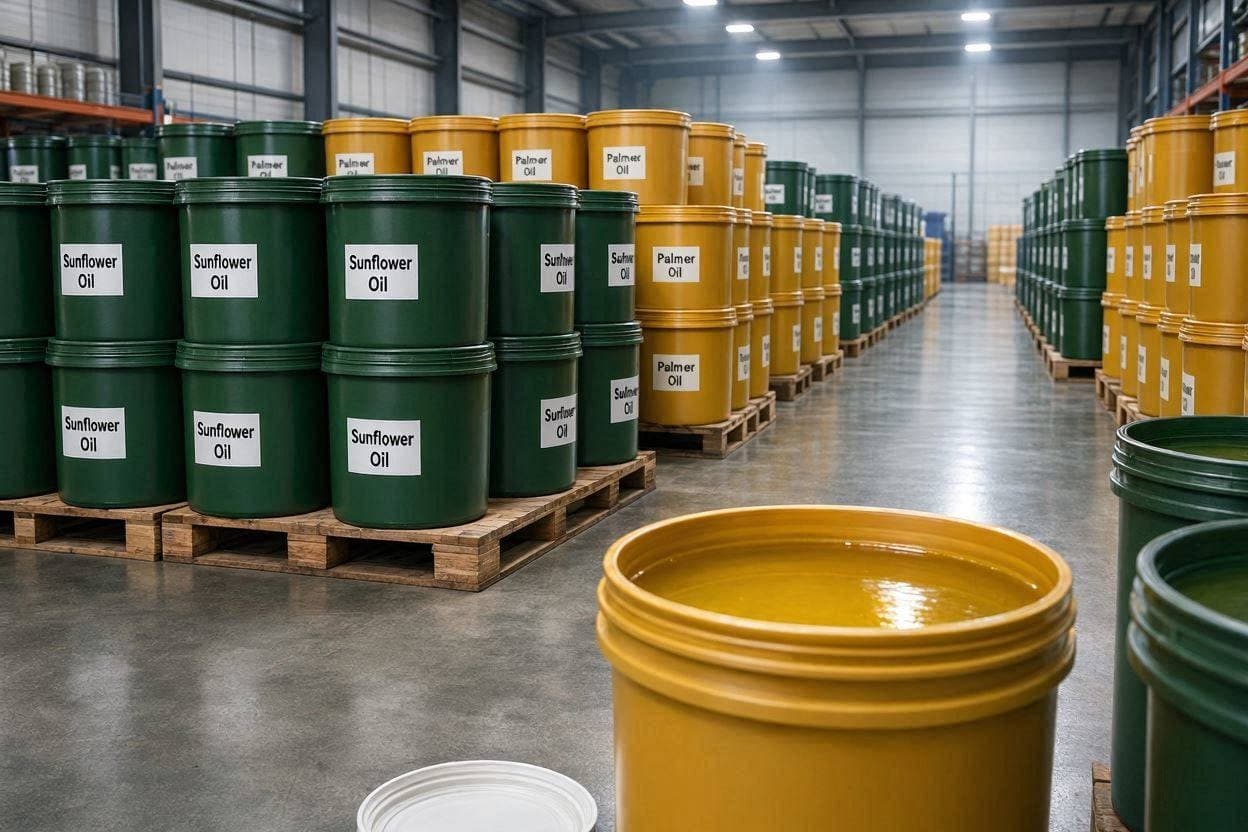
For any kitchen going through 20L buckets of sunflower or palm oil every week, the supplier you choose has a direct line to your food cost and your food quality. Yet a lot of purchasing decisions still come down to whichever rep called last. Here's what's actually worth checking before you commit.
Consistency of supply comes first. A supplier who's out of stock on your usual brand during a busy week forces you into an unplanned substitution — different oil, different smoke point, sometimes a different taste in the final dish. Ask any potential supplier directly how they handle demand spikes and what their typical stock levels look like, not just what they can offer you today.
Freshness and quality indicators matter more than most buyers check for. Oil should be clear, without sediment, and free of any rancid smell before it's even opened. If a supplier can't tell you when a batch was bottled or packaged, or can't speak to their own quality-control process, that's worth treating as a red flag rather than a minor gap.
Price stability is often more valuable than the lowest headline price. Kitchens running tight margins need to plan food cost weeks or months ahead — a supplier whose pricing swings unpredictably with every delivery makes that planning difficult, even if their average price looks competitive on paper. Ask about how often pricing is reviewed and what drives changes.
Packaging and bucket sizing should match how your kitchen actually operates. 20L buckets suit most restaurant kitchens, but a high-volume hotel or catering operation may do better negotiating larger or more frequent bulk orders rather than managing dozens of individual buckets. A good supplier will ask about your volume before recommending a size, not just sell you their default.
Finally, consider whether dealing with one supplier for both your fresh oil and your used oil collection is worth the convenience — it often is. One account, one relationship, one team who already understands your kitchen's volume and schedule tends to beat juggling separate vendors for what is, in practice, two sides of the same oil cycle moving through your kitchen every week.